Thursday, September 15, 2011

Commonwealth War Graves

Commonwealth War Graves at Poznań Old Cemetery


It was, I amid, with some surprise that I noticed a sign to Poznan Old Garrison Cemetery with the subscipt : British Commonwealth Section (1), while driving through Poznan a year or two back. Alas, as with many things in life, my initial intrigue was overtaken by other things and it was only when I noticed a similar sign on the road to Gdansk the other day that I decided to check it out on-line.

(1) Yes I know this is an outdated name and politicly incorrect, but then again most people in Poland are still strugling with the Bombay/Mumbai thing.

When you go on the Commonwealth War Graves Commission webiste you are told this about the Poznan cemetery:


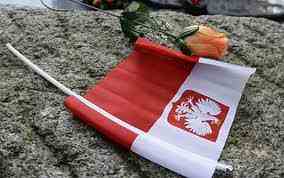
Grave of Lithuanian RAF Pilot
After the First World War, the graves of Commonwealth servicemen who had died in Poland as prisoners of war were gathered together in this cemetery. There are now 174 Commonwealth servicemen of the First World War buried or commemorated in the cemetery. One of the burials is unidentified. Special memorials commemorate one casualty known to have been buried in Czersk Prisoners of War Cemetery, 29 known to have been buried at Szczypiorno Prisoners of War Cemetery and 18 known to have been buried at Pila (formerly Schneidemuhl) Prisoners of War Cemetery, all of whose graves could not be identified. The majority of the 283 Second World War burials in the cemetery are those of airmen, many of whom died in bombing operations on Stettin (now Szeczin). Also buried here are those involved in the mass escape from Stalag Luft 3, Sagan (now Zagan), in March 1944, and others who died while prisoners of war during the German occupation, at Stalag VIIIC, Sagan, Stalag XXID at Poznan, Oflag XXIB (also known as Oflag 64) and Stalag XXIB, both at Schubin (now Szubin). There are also 19 war graves of other nationalities in the cemetery, most of them Polish. The cemetery also contains the POZNAN MEMORIAL commemorating five RNAS armoured car ratings who died near Brezazany in July 1917 and whose graves were never located.

To be honest, until coming to Poland and in fact living here, I did not know much about Poland's First or Second World War history. Everyone of course knows the big stuff such as the Sept. '39 invasion and Britain and France's declaration of war etc... But beyond that most west European's knowledge of Poland's war is limited to the odd character in an otherwise overly British/American war film.

Perhaps its know different, with more east European influnce on the film indusry. But that was definetly the case for anyone who grew up watching repeats of sixties war films :)

This faliure of west Europeans to understand the wars in east Europe is of course indicative of the post-war devide. It is a cruel irony that the so called 'free' west knew actually far less about their European brethren than their eastern counterparts. Growing up in Communist Poland, often meant a thirst for all things western, while those in the west had little interest in all things eastern.

In many ways this was of course encouraged by official government policy: after the war the government wanted to make sure awkward issues of Polish occupation and betrayal were kept out of the general public's attention. It is only in recent years that this subject has been revisted, as illustrated by the resent visit of Polish Foriegn Minister, Radosław Sikorski to the RAF Museum's new exhibit on foreign fighter pilots in the Battle of Britain.

Tuesday, August 30, 2011

Return of the wonderer

To be truthful I didn't really go anywhere, I just hibernated in the real world over summer as is often my way. However I am now back online and ready to write ironic witticisms on the basis of what I observe around me.

Now is that quadrinal (is that a word?) affair that is the bane of most countries these days: the national election campaign. As a political scientist by profession perhaps I should be more supportive of the democratic process but I am often reminded of Winston Churchill's comment to Parliment when he described democracy as the worst form of government except all of those others that have gone before it!

Churchill's other famous remark about democracy is perhaps never quite so fitting than during an election campaign: that the best argument against democracy is to have a five minute conversation about politics with the average voter.
The crazy fever that is modern politics brings to the fore many of the manipulative streaks common to the human condition.


Take the Law and Justice party for example; they have based their campain on the percieved injustice suffured by Poland (read them) as a result of the Smolensk aircrash. Rather than dealing with any real issues affecting Polish people they divert attention.

That is not to say that Civic Platform are any better. Rather than explaining why they have failed to solve the pension problem left over from communism they focus attention on GDP growth and infrastructure projects. GDP is all very well but it often provides an inaccurate inducator of real standards of living for the majority of people. Take India or Brazil as cases in point: GDP growth has been phenominal in recent years, yet poverty persists.

On the one hand we have PIS who uses campaign strategies based on a reliance on their voters having a complete ignorance of the issues being discussed. Take their campaign message calling for the slashing of fuel tax for example (where exactly do they plan to get the money from to run the country?) while on the other hand PO are no better in some respects as they focus on non-controversial goals that they can plod on with and show that they 'are doing something'.

This in many ways is indicative of the state of Poland's political scene. A colleague of mine said to me a while back that she would not discuss politics with most people as they would become aggressive and dogmatic. Polish people have lost the ability to debate in many ways. By ability I obviously do not mean Linguistic but rather cultural. Divisions within society have been allowed to be monopolised by political forces to the extent that the normal definition of a pluralist democracy is in fact ironically misplaced as what choice lies in such diametrically opposed positions? There is no to and throw of political ideas; rather people are entrenched and fight a war of attrition.


Sunday, July 24, 2011

An atypical look at Polish women

For many intelligent Polish people, there are only so many times you can hear that when asked what the best thing in Poland is, people reply "Polish women". Don't get me wrong, I am married to a beautiful Polish women and would happily describe Polish women to any foreigner as being the most beautiful women in the world. However, there are a few more things to Poland that it's women :)

But lets stay on the topic of women, for many the promotion of beuty tends to relegate brains and achievements to an unspoken of sphere. Therefore it is important to bring to light other aspects of Polish women. A recent report put Polish women as amongst the most business focused un Europe with many having their own firms, proportionatly more than in other EU countries.

Education is also an area where women excell in Poland with women obtaining on average better qualifications than their male counterparts. Further to this more women are involved in science subjects than in many other countries.

However, wages ofcourse do not reflect these facts: Polish women on average are paid between 24-35% less than men. What causes this?

In my humble opinion one of the core reasons is the deeply rooted tacit acceptance of traditional gender roles. This is undlined by institutional factors: the position of male priests withib Poland or the fact that Pokand has never had a female President or Prime Minister.

Will this change? Undoubtedly. When? Slowly and incremenedly. One thing which would be an imense positive factor would be the emergence of a truly strong and inspirational female PM or President.